
- Home
- keynotes
keynotes
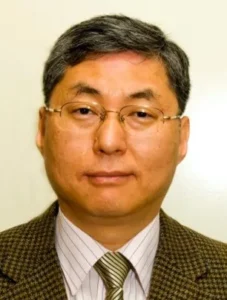
Title: Low Power Neuromorphic LLM Accelerators
Speaker: Prof. Hoi-Jun Yoo, KAIST, Korea
Abstract: In the current landscape of computing, the prevalence of AI applications on mobile and wearable devices has emphasized the critical importance of designing energy-efficient AI accelerators to curtail power consumption. Beyond CNN optimization, neuromorphic solutions such as Spiking Neural Networks (SNN) have been actively studied to utilize the features of biological neurons such as sparsity within the input feature map, and forward learning. Neuromorphic approaches optimize the performance of AI accelerators for the specific characteristics of AI workloads, further contributing to gains in energy efficiency. Moreover, the synergies between CNN and SNN are explored and an approach that takes advantages of the strengths of both architectures will be introduced for high energy efficiency. The combination of SNN and CNN results in a highly energy-efficient SoC, proficient in processing many AI applications with remarkable power efficiency. The detail architecture and some implementation results will be explained with exemplary applications.
Bio: Prof. Hoi-Jun Yoo is the Dean of AI Semiconductor Graduate School, and full professor of Electrical Engineering at KAIST and the director of AI-PIM Design Research Center. He is an IEEE Fellow, and a member of National Academy of Science, ROK. From 2003 to 2005, he was the full time Advisor to the Minister of Korean Ministry of Information and Communication for SoC and Next Generation Computing. His current research interests are Bio Inspired Intelligent SoC Design, Wearable Computing and Wearable Healthcare. He published more than 200 papers, and wrote 5 books including “Mobile 3D Graphics SoC”((2010, Wiley) and “Biomedical CMOS ICs”(2011, Springer).
Dr. Yoo received the National Medal for his contribution to Korean Memory Industry in December of 2011, the Korean Scientist of the Month award in Dec. 2010, Best Research of KAIST Award in 2007, Design Award of 2001 ASP-DAC, and Outstanding Design Awards 2005, 2006, 2007, 2010, 2011, 2014 A-SSCCs, and Best Demo Award of ISSCC 2016. He is a member of the executive committee of Symposium on VLSI, and A-SSCC. He was the TPC Co-Chair of ISWC 2010, IEEE Distinguished Lecturer(’10-’11), and Asia Chair of ISSCC(‘10-‘11). He was the Plenary Speaker of ISSCC 2019, TPC Chair of ISSCC 2015, Vice Chair of ISSCC 2014, Technology Direction Sub-Committee Chair of ISSCC 2013, a member of Executive Committee of ISSCC 2008-2015 and recognized as the top 4 paper-contributor for 2004-2013 ISSCCs, top 10 paper contributor for 1954-2013 ISSCCs, and top 5 paper contributor for 1954-2023 ISSCCs.
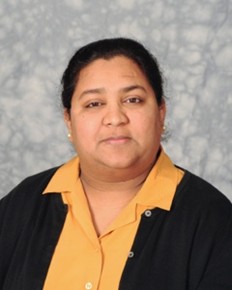
Title: Neuro-Inspired Memories: Driving Next-Generation AI Models for Computer Storage Systems
Speaker: Tanveer Syeda-Mahmood, IBM Fellow, USA, Adjunct Professor, Stanford University, USA
Abstract:Neuroscience has been a building block for artificial intelligence since this field began, and as recognized by the recent Nobel prize in Physics for the work on Hopfield networks. Building computational models of different brain systems can give us new insight into the development of next generation computer systems. At IBM Research, we are pioneering one such ambitious project to develop a computational model of human declarative memory system in the brain. This is intended to serve both as a virtual memory prosthetics for memory-impaired patients and to guide the design of next-generation computer storage systems. In this talk I will describe our emerging work on new neural architectures for semantic and episodic memories as well as representation and encoding methods in the tri-synaptic circuit of the hippocampus. Specifically, I will present our latest work on developing a foundational model for knowledge to emulate human semantic and episodic memories using cross-linked neural embeddings for visual and language concepts. I will also describe a new neural model of storage and retrieval called cross-modal Hopfield encoding networks which make the Hopfield networks more practical for use in computer systems. I will discuss how these new neural architectures are beginning to influence IBM’s hardware accelerated AI/ML infrastructure solutions including the recently announced IBM content-aware storage system jointly with NVIDIA that convert passive storage devices to active content-understanding systems.
Bio: Dr. Tanveer Syeda-Mahmood is an IBM Fellow and a Global Imaging AI leader in IBM Research. She is also an Adjunct Professor in the Dept. of Biomedical Data Science at Stanford University. As a worldwide expert in imaging, she is leading the company’s future in Multimodal Bioinspired AI and defining new features in WatsonX series of products. Until recently, she was the Chief Scientist of the Medical Sieve Radiology Grand Challenge that helped launch the field of Radiology AI and the IBM Watson Health Imaging business. As an IBM Fellow, she is also involved in long-term strategic thinking on the evolution of the field of AI.
Dr. Tanveer Syeda-Mahmood graduated with a Ph.D. from the MIT Artificial Intelligence Lab in 1993. Prior to coming to IBM, she led the image indexing program at Xerox Research and was one of the early originators of the field of content-based image and video retrieval. Over the past 30 years, her research interests have been in a variety of areas relating to artificial intelligence ranging from computer vision, image and video databases to recent applications in medical image analysis, healthcare informatics and clinical decision support.
Dr. Syeda-Mahmood has over 300 refereed publications with 10 best paper awards, and over 170 filed patents. Dr. Syeda-Mahmood has chaired many international conferences over the years including MICCAI (2023), IEEE ISBI (2022), HISB (2011), and IEEE CVPR (2008). She is a Fellow of IEEE, AIMBE (American Institute for Medical and Biological Engineering) and AAIA (Asian Association of Artificial Intelligence) and MICCAI (Medical Imaging and Computer-Assisted Intervention) societies. She recently received the 2025 IEEE EMBS Professional Career Achievement Award for outstanding technical achievement and leadership in multimodal decision support with lasting impact to academia/industry in multimodal healthcare AI.
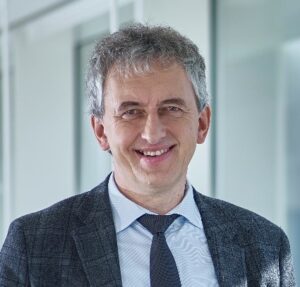
Title: Nature as Inspiration in the Design of Biomedical Analog Integrated Circuits?
Speaker: Prof. Georges Gielen, KU Leuven, Belgium
Abstract: Nanoelectronics with its miniaturization and powerful capabilities has a deep impact on our society in all its aspects. Also the biomedical field is undergoing a major change towards more preventive monitoring and more personalized, precision medicine. Wearables, digestibles and implantables play a key role in this evolution. This keynote will present recent trends and evolutions in the design of electronics for such devices. The challenge is the need for small size and low energy, in combination with effective signal capturing and processing. Inspiration from nature can provide the techniques to bridge this gap. This will be illustrated with chip designs for several biomedical applications ranging from e-skin to neuromodulation.
Bio: Prof. Georges G.E. Gielen received the MSc and PhD degrees in Electrical Engineering from the Katholieke Universiteit Leuven (KU Leuven), Belgium, in 1986 and 1990, respectively. Currently, he is Full Professor in the MICAS research division at the Department of Electrical Engineering (ESAT) at KU Leuven. From 2013 until 2017 he served as Vice-Rector for the Group of Sciences, Engineering and Technology. In 2018 he was visiting professor at UC Berkeley and Stanford University. From 2020 to 2024 he served as Chair of the Department of Electrical Engineering (ESAT) at KU Leuven.
His research interests are in the design of analog and mixed-signal integrated circuits, and especially in analog and mixed-signal CAD tools and design automation, including modeling, simulation, optimization and synthesis as well as testing. He has graduated over 55 PhDs so far. He is a frequently invited speaker and serves/served as Distinguished Lecturer of the IEEE Solid-State Circuits Society and the IEEE Circuits and Systems Society. He is coordinator/partner of several academic and industrial research projects in the above fields, including having awarded the ERC Advanced Grant AnalogCreate. He has (co-)authored 14 monograph books and more than 800 publications in edited books, international journals and conference proceedings. He is a 1997 Laureate of the Belgian Royal Academy of Sciences, Literature and Arts in the discipline of Engineering. He is Fellow of the IEEE since 2002, and received the IEEE CAS Mac Van Valkenburg award in 2015, the IEEE CAS Charles Desoer award in 2020, as well as the EDAA Achievement Award in 2021. He is an elected member of the Royal Flemish Academy of Belgium in the class of Technical Sciences, and of the Academia Europaea.