
- Home
- Tutorials
Tutorials
BioCAS 2025 invites all attendees, especially students, to participate in our tutorials. Through the IEEE Continuing Education initiative, you can gain exclusive IEEE credentials. This opportunity is designed to enhance tutorials’ value, participation, and quality, providing an enriching educational experience for all.
By attending, you’ll receive an official IEEE certificate with Continuing Education Units (CEUs) or Professional Development Hours (PDHs), offering recognized validation of your commitment to continuous learning.
More information about the IEEE Continuing Education Initiative at BioCAS2025 is provided here.

Prof. Rabia Yazicigil Kirby, Boston University, USA
Tutorial title:
Cyber-Secure Biological Systems (CSBS)
Abstract:
This talk will introduce Cyber-Secure Biological Systems, leveraging living sensors constructed from engineered biological entities seamlessly integrated with solid-state circuits. This unique synergy harnesses the advantages of biology while incorporating the reliability and communication infrastructure of electronics, offering a unique solution to societal challenges in healthcare and environmental monitoring. In this talk, examples of Cyber-Secure Biological Systems, such as miniaturized ingestible bioelectronic capsules for gastrointestinal tract monitoring and hybrid microfluidic-bioelectronic systems for environmental monitoring, will be presented.
Bio:
Rabia Tugce Yazicigil is an Associate Professor of ECE Department at Boston University and a Network Faculty at Sabanci University. She was a Postdoctoral Associate at MIT and received her Ph.D. degree from Columbia University in 2016. Her research interests lie at the interface of integrated circuits, bio-sensing, signal processing, security, and wireless communications to innovate system-level solutions for future energy constrained applications. She has received numerous awards, including the NSF CAREER Award (2024), Early Career Excellence in Research Award for the Boston University College of Engineering (2024), the Catalyst Foundation Award (2021), Boston University ENG Dean Catalyst Award (2021), and “Electrical Engineering Collaborative Research Award” for her Ph.D. research (2016). Dr. Yazicigil is an active member of the Solid-State Circuits Society (SSCS) Women-in-Circuits committee and is a member of the 2015 MIT EECS Rising Stars cohort. She was selected as an IEEE SSCS and CASS Distinguished Lecturer for the 2024-2026 term and elected to the IEEE SSCS AdCom as a Member-at-Large in 2024. She was selected as a member of the 2024 National Academy of Engineering (NAE) US Frontiers of Engineering (USFOE) cohort. She serves as an Associate Editor of the IEEE Transactions on Circuits and Systems-I (TCAS-I) and the IEEE Transactions on Circuits and Systems for Artificial Intelligence (TCASAI). Additionally, she is the Workshop Co-Chair of the IEEE ESSERC 2024, and a Technical Program Committee member of the IEEE ISSCC and RFIC.
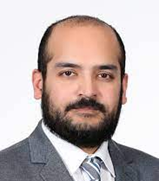
Prof. Haider Butt, Khalifa University, UAE
Tutorial title:
Wearable Photonic Healthcare Devices
Abstract:
Commercially available hydrogel-based soft contact lenses are extensively used for cosmetic or vision correction purposes. Such lenses are typically manufactured from tailored hydrogel composites, with high water contents for comfort, softness, and oxygen permeability. A widely reported topic of interest has been to functionalize the surfaces of contact lenses with nanoparticles for optical, self-hydration, anti-oxidative, anti-bacterial, and drug delivery applications. Our group achieved the fabrication of active nanostructures on these hydrogel-based soft contact lenses. This challenging task of producing nanostructures on a soft, fragile, hydrated, and curved surface of a contact lens was achieved through the usage of a laser-based direct writing approach. Self-interference of a pulsed nanosecond laser was used to selectively ablate the absorbing media placed on the contact lens’s surface. These nanostructures act as optical transducers, and they can be used for sensing various parameters on the ocular surfaces, paving the way forward for smart contact lenses.
The integration and volumetric dispersion of nanomaterials into hydrogels is also a prominent research challenge for a myriad of healthcare applications, such as bio-sensing, cancer therapy, and bone tissue engineering. In particular, soft contact lenses, functionalized with metallic nanoparticles, are of interest for therapeutics and color filtering applications. In recent years, several types of (metallic and nonmetallic) nanoparticles were synthesized, characterized, and incorporated within the printable pHEMA hydrogel material. The materials were utilized in Vat Photopolymerization-based 3D printers for printing soft contact lenses, and their resulting optical, mechanical, hydration, and material properties were assessed. The optical transmission properties of the 3D printed nanocomposite lenses were found to be analogous to those of the commercial glasses used for tackling color blindness related conditions. Their water content and wettability properties were better in comparison to some of the commercially available contact lenses used for cosmetic/vision correction purposes. Overall, in the tutorial, I will present the recent trends in smart contact lenses and particularly our group’s contribution towards 3D printing of multi-functional and nanocomposite contact lenses for ocular health management and, more generally, color filtering applications.
Bio:
Dr. Haider Butt did his M.Phil. in Electrical Engineering from the University of Cambridge (UK) in 2008, followed by a PhD in 2012. He was selected as the Henslow Research Fellow by the Cambridge Philosophical Society, University of Cambridge, in October 2012. In 2013, he was appointed as a Lecturer of Nanotechnology at the School of Engineering, University of Birmingham (UK) and was promoted to Senior Lecturer in 2016. He joined Khalifa University in 2019, where he presently serves as a Full Professor of Mechanical Engineering and leads a Nanophotonic Laboratory. Dr. Butt has published over 200 journal publications and has received numerous international research awards. His research group mostly focuses on additive manufacturing of nanophotonic devices, particularly smart contact lenses for sensing and color blindness related applications.
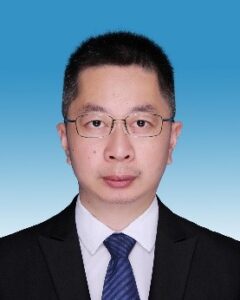
Prof. Bo Zhao, Qiushi Distinguished Professor, Zhejiang University, China
Tutorial Title:
Wireless Biomedical Sensors — From “Near Zero Power” to “Battery Free”
Abstract:
Wireless sensors are widely used in biomedical applications, such as ExG (EEG, EMG, and ECG) monitoring, neural recording, continuous glucose monitoring (CGM), cerebral oxygen monitoring (COM), touch sensing, temperature sensors, etc. A low-power wireless-sensing chip is required to enable a miniature battery size and a long lifetime. However, the battery in a traditional wireless sensor still adds to the overall size and needs periodic replacement. In comparison, battery-free wireless techniques lower the body burden and mitigate the biological responses for wearables and implants, respectively. In addition, the battery-free wireless techniques offer infinite life time for the biomedical sensors. In this talk, the wireless biomedical sensors will be listed and described, from near-zero-power techniques to battery-free techniques, including our recent works published in ISSCC and JSSC.
Bio:
Bo Zhao received the Ph.D. degree from EE Department of Tsinghua University, Beijing, China, in 2011. He worked in National University of Singapore and UC Berkeley (BWRC) from 2013 to 2018. Since 2018, he has been a Professor with the Institute of VLSI Design, Zhejiang University, Hangzhou, China. In 2024, he was rated as Qiushi Distinguished Professor of Zhejiang University. He has authored or coauthored more than 70 articles and book chapters. He holds more than 30 Chinese patents. His research interests include IoT radios, power harvesters, biomedical sensors, wireless systems, and wearable/implantable radios. Dr Zhao was a recipient of the 2017 IEEE Transactions of Circuits and Systems Darlington Best Paper Award, the Design Contest Award of the 2013 IEEE International Symposium on Low Power Electronics and Design, the Best Associate Editor of IEEE Transactions on Circuits and Systems I, as well as the Best Paper Award of the 2024 IEEE International Conference on Integrated Circuits Technologies and Applications (ICTA). He works as the International Technical Program Committee (ITPC) member of ISSCC. He was the Publication Chair for the 2016 IEEE Biomedical Circuits and Systems Conference. He serves as the Chair of IEEE Biomedical and Life Science Circuits and Systems Society, as well as an Associate Editor for the IEEE Transactions on Biomedical Circuits and Systems (2024-now) and IEEE Transactions on Circuits and Systems I (2020-2023). Dr. Zhao also serves as a Committee Member of IEEE/C/SM.
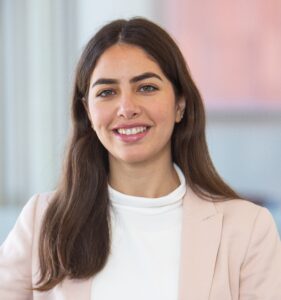
Dr. Farah Shamout, NYU - Abu Dhabi
Tutorial Title:
Multimodal AI & Machine Learning for Precision Medicine
Abstract:
Biomedical systems inherently deal with multimodal biosignals, such as time-series data collected by wearable sensors, data extracted from electronic health record systems, and medical images. Multimodal learning, a subset of Artificial Intelligence (AI), focuses on the development of machine learning techniques that fuse information from different data modalities. This tutorial aims to provide a comprehensive introduction to multimodal AI and machine learning for healthcare, covering key technical concepts, evaluation frameworks, case studies and applications, and considerations for modeling real-world data.
Bio:
Farah Shamout is an Assistant Professor of Computer Engineering at NYU Abu Dhabi, where she leads the Clinical Artificial Intelligence Lab. She is also an Associated Faculty at the NYU Tandon School of Engineering (Computer Science & Engineering and Biomedical Engineering Departments) and an Affiliated Faculty at NYU Langone Health (Radiology). At the Clinical AI Lab, Dr. Shamout is interested in developing machine learning methods and systems using heterogeneous real-world data for applications in computational precision health, including electronic health records data and medical imaging. Methodologies of interest pertain to multi-modal learning, foundation models, and trustworthiness, to achieve high performance and utility in clinical practice. Dr. Shamout completed her DPhil (PhD) in Engineering Science at the University of Oxford as a Rhodes Scholar and was a member of Balliol College. She also completed her BSc in Computer Engineering (cum laude) at NYU Abu Dhabi.
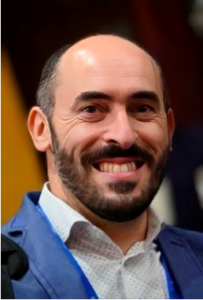
Prof. Andrea De Marcellis, University of L’Aquila, Italy
Tutorial:
Optical Biotelemetry Systems: Basics, Advances, and Challenges for Biomedical Implants
Abstract:
The Tutorial introduces to the design of wireless communication systems for biomedical implants by making a detailed focus on the basics and advances of the optical biotelemetry. In particular, the design of new architectures of biomedical systems is demanding to fulfill the need to acquire, process and generate biological/neural signals providing high-quality healthcare to sick persons. Therefore, the following key-points are required: design of novel biomedical apparatus for prosthetic devices, diagnostic and therapeutic instrumentations, neural systems, etc., guaranteeing the capability to transmit-receive data from-to inside-outside of the human body by means of high-efficiency implantable wireless data link solutions. Consequently, it is needed to develop implantable (transcutaneous) wireless biotelemetry systems achieving high data rate transmission, high efficiency characteristics (low-voltage/low-power), small Si area and low Bit Error Ratio.
Bio:
Andrea De Marcellis received the Laurea degree in Electronic Engineering and the Ph.D. degree in Microelectronics from University of L‘Aquila, Italy, in 2005 and 2009, respectively. He is currently an Associate Professor of Electronics at the University of L‘Aquila (ITALY), Department of Information Engineering, Computer Science and Mathematics (DISIM), head of Electronic and Photonic Integrated Circuits and Systems Laboratory (EPICS Lab) and of Digital Health Technologies Laboratory (DHT Lab). His main research activities concern the design of mixed-signal electronic and optoelectronic integrated circuits and systems for signal conditioning, data processing, optical sensing, and communication links (data and power) for biomedical applications. He has co-authored a book and two book-chapters and more than 170 scientific publications in international journals and conference proceedings. He is Chair of the Technical Committee “Optoelectronic sensing systems” of the IEEE Italy Sensors Chapter and Associate Editor of IEEE ACCESS Journal.